Stay Safe.
Stay In Control.
Scams and fraud are becoming more common. This page helps you recognize them early, protect your personal information, and know what to do if something does not feel right.
You do not need special technical skills.
You only need to slow down and check before acting.

Equip Yourself with Essential Safety Knowledge
Common Scams to Watch For
Scams often look ordinary at first. Many seniors affected by fraud say the contact seemed believable, friendly, or urgent. Use the table below to recognize the most common scams affecting seniors in Canada.
or a utility company
or one-time codes
or payment
or confirmation replies
or wire transfers
or financial access

Scammers pretend to be helpful, polite, or official.
That does not make them legitimate.
Warning Signs of Fraud
If you notice any of the signs below, stop and pause.
You are told to act immediately
You are asked to keep the situation secret
You are told not to talk to family or the bank
You are asked for gift cards, cash, or wire transfers
You are asked to share passwords or
one-time codes
You feel rushed, nervous, or confused
The story sounds urgent but hard to verify

Protecting Personal Information
A few clear rules can prevent most scams. Use this Do / Don’t table as a simple reference.


What to Do if You
Are Targeted
you are not in trouble, simply follow these steps calmly.

Stop the Interaction
Hang up. Do not reply. Do not send anything else.
Do Not Send Money or Information
Even if the story sounds serious.
Talk to Someone You Trust
A family member, friend, or caregiver.
Contact Your Bank
Use the phone number on your card or statement.
Report if You Choose
Reporting can help protect others, but it is always your choice.
Senior Outreach Kits
Youth Door-to-door
Conversation Cards
These cards support youth in starting and guiding conversations with seniors in a calm, respectful manner. They ease initial awkwardness, discourage lecturing, and keep the focus on listening first—encouraging thoughtful, two-way dialogue built on trust.

Downloadable Guides Designed for Clarity and Action
Downloadable guides designed for clarity and action

A4 Leave Behind Handouts

Set of Three Community Posters
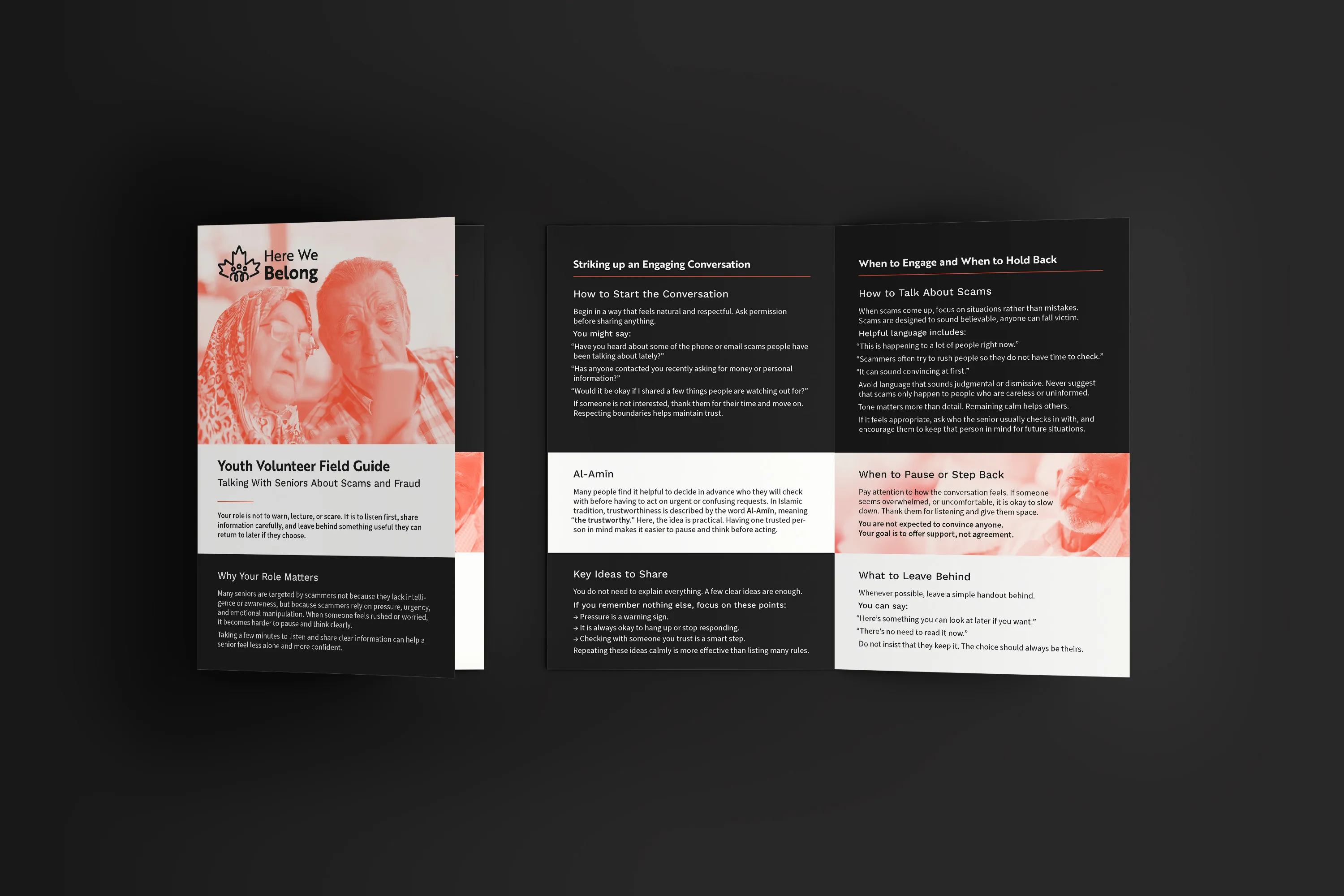
Youth Volunteer Field Guide