
Know who you are. Stand with confidence.
Being Muslim in Canada comes with questions, pressure, and choices. This space helps you build confidence in your identity, understand your rights, and navigate school, online life, and public spaces without losing yourself.
Identity isn’t inherited. It’s built.

Being Proud of Your Identity
It is something you come to understand, question, and grow into.

Be Confident in Who You Are
Pride in your identity does not come from reacting to pressure or defending yourself against stereotypes. It comes from knowing what you believe, why it matters to you, and how it shapes your choices.
Finding Your Ground
Many Muslim youth feel caught between expectations.
At school. Online. In social spaces. Even within their own communities.
Some feel the need to downplay their faith to fit in.
Others feel pressure to represent Islam perfectly at all times.
Both can leave you feeling unsure of where you stand.
This space is not about choosing sides. It is about grounding yourself.
Steady in Your Journey
Being proud of your identity means being honest about where you are in your journey. It means knowing that faith is not a performance and confidence is not loudness. It is steadiness.
You do not need to have every answer.
You do need to know what you stand for.
That includes knowing:
⮑ What your faith teaches about character and conduct
⮑ How your values guide your decisions
⮑ Where you are still learning, and who you trust to learn from
Confidence Comes From Knowledge
If you feel unsure, that is not failure. It is an invitation to learn properly, from people who carry knowledge with responsibility.
Confidence grows when identity is rooted in understanding, not pressure.
And that foundation is what allows you to move through the world without apology or fear.
Representing Islam with Confidence

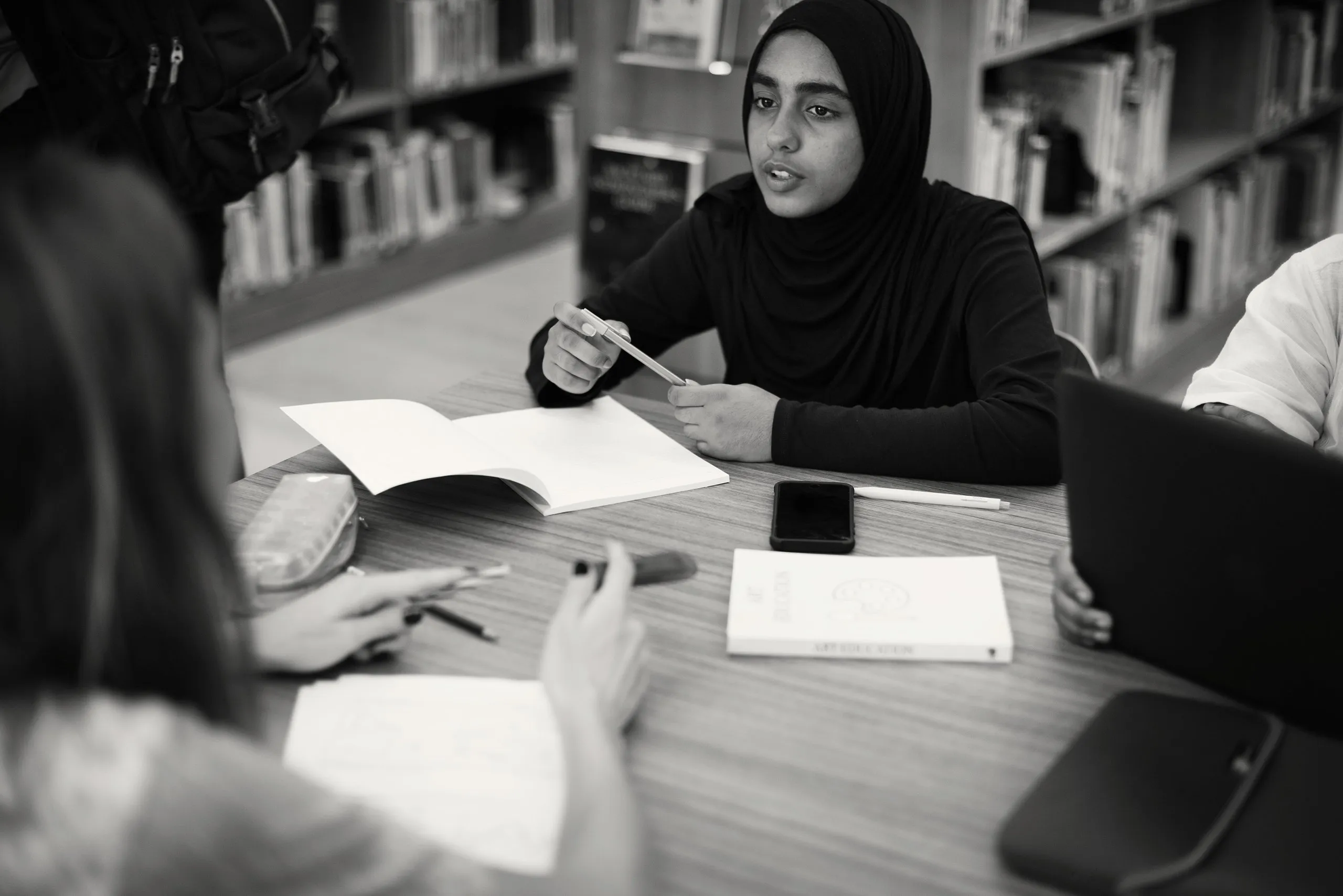

How to Decide What to Do
Here’s how to think through common situations and decide what actually serves you.
Choose What Feels Right
There will be times when someone is genuinely curious and open to listening. There will also be times when questions come loaded with assumptions, frustration, or provocation.
You don’t owe every situation the same energy.
⮑ Sometimes explaining makes sense.
⮑ Sometimes redirecting is smarter.
⮑ Sometimes disengaging is the healthiest choice.
This isn’t about finding the “right” answer.
It’s about choosing the response that keeps you steady.

What People Actually Say
You don’t need rehearsed speeches.
You just need language that feels honest to you.
That can sound like:
“I can’t speak for everyone.”
“That’s not something I want to get into.”
“I’m okay explaining, but not debating.”
“I don’t feel comfortable with that question.”
“Let’s change the subject.”
These are not dramatic exits.
They are simple ways of keeping control of the conversation.

Something to
Hold On to
⮑ You are not required to represent Islam at every turn.
⮑ You are allowed to be learning.
⮑ You are allowed to be quiet.
⮑ You are allowed to protect your space.
Representing Islam with confidence is not about always responding. It's about knowing when responding is worth it and when it isn't.
Online Life &
Digital Awareness
Boundaries & Control Online




Where Islamophobia Shows Up Online
Islamophobia online does not always look like explicit threats. It often appears in familiar, everyday ways:
⮑ Comments that mock/stereotype Muslims under news posts or videos
⮑ Jokes in group chats that single out Islam or Muslim practices
⮑ DMs asking aggressive or invasive questions
⮑ Screenshots taken out of context and shared publicly
⮑ Anonymous accounts spreading misinformation
⮑ Dog-whistle language that frames Muslims as dangerous/untrustworthy
These interactions can feel small on their own. Over time, they add up and affect how confident you feel online.

Setting Digital Boundaries
You are allowed to decide what you respond to and what you ignore. Silence is not weakness. Blocking is not failure. Protecting your space is part of protecting yourself.
Not every post deserves your attention. Not every message requires a reply. Your responsibility is not to educate the internet. Your responsibility is to your wellbeing.
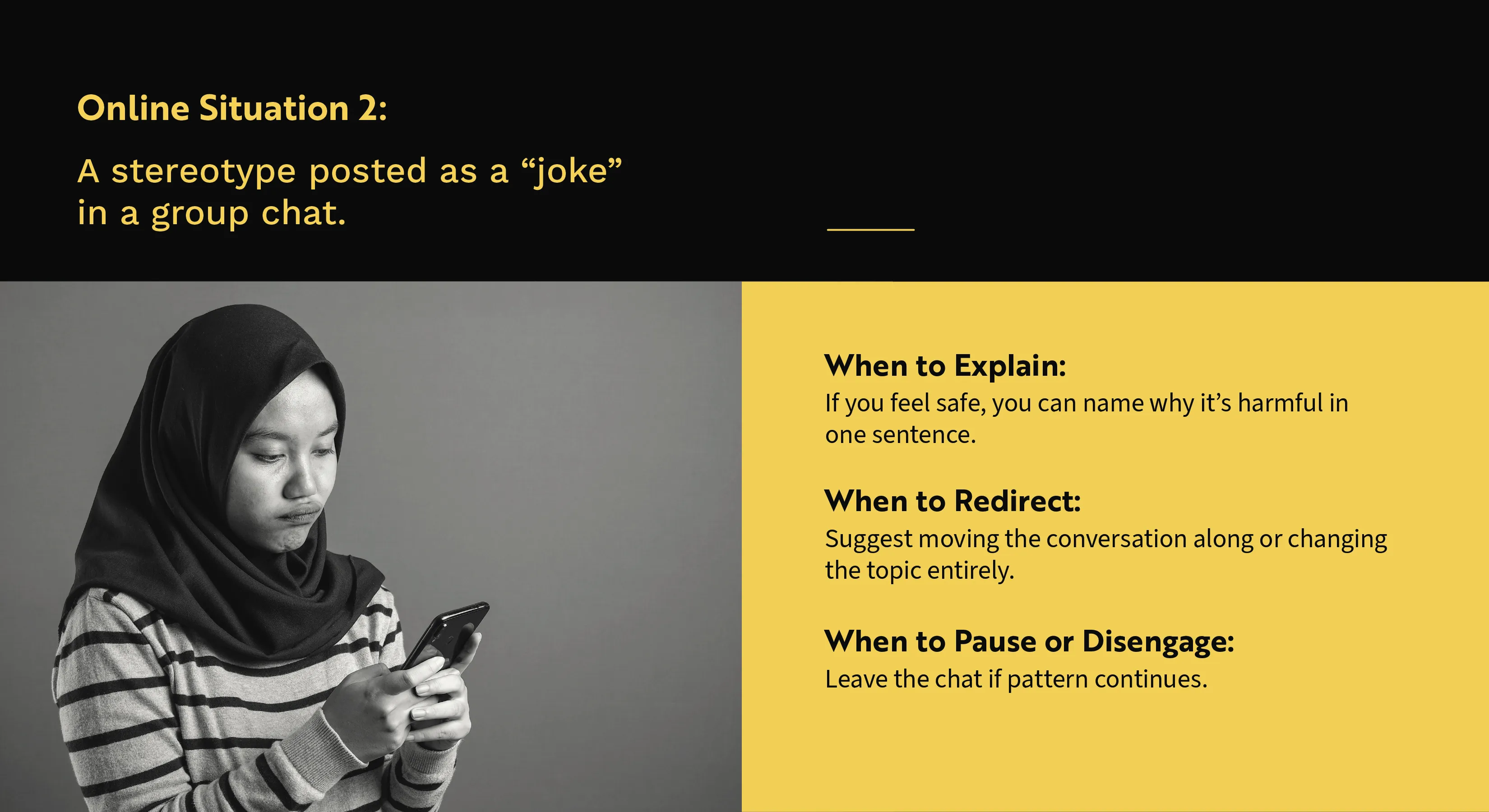
How to Respond Online: A Practical Decision Guide
The guide below is a reference point. It is not a rulebook. It is a tool to help you pause and choose deliberately instead of reacting under pressure.



Documenting When it Matters
Sometimes the right response is not engagement, but documentation.
If something feels threatening, persistent, or targeted:
⮑ Take screenshots
⮑ Save usernames, dates, and links
⮑ Keep messages even if you intend to block the account
Young Muslims report online harassment in digital spaces
You do not need to decide what to do with this information immediately. Keeping records gives you options later.
Say they've witnessed Islamophobic content without reporting it
Community Matters
Online Too
You are shaped by the spaces that you spend the most time in. That includes digital ones.
You are allowed to leave spaces that drain you. You are allowed to curate your online environment. That is not avoidance. It is discernment.
How you respond online is part of who you are becoming. Digital choices shape habits, character, and confidence over time.
Seek out online spaces that:
Treat Muslims with Respect
Allow Disagreement Without Hostility
Moderate Harmful Behaviour
Support Learning Rather Than Spectacle

Developing Character and Response
As a Muslim, your character is not measured by what you believe or say. It is reflected in consistency, restraint, honesty, and how you carry yourself under pressure. These qualities develop over time, through repeated choices, not through perfect responses.
You will encounter moments that feel unfair, uncomfortable, or frustrating. Some will call for action. Others will call for restraint. Learning the difference is part of growing into your faith and your sense of self.
This section is about building responses you can live with long after the moment has passed.
Building Response
Navigating everyday conversations can be challenging. These practical considerations can help you respond to unexpected or uncomfortable situations in ways that protect your peace while remaining true to yourself and your beliefs.

Response is Not the Same as Reaction
Reactions are fast. They are shaped by emotion, pressure, or the need to defend yourself immediately. Responses take more effort. They are shaped by values, intention, and awareness of consequences.
Developing character means learning to pause before reacting, even when you feel provoked. That pause creates space to choose what aligns with who you want to be, not just how you feel in the moment.
This does not mean staying silent out of fear. It means choosing responses that protect your dignity and do not compromise your values.

Learning from the
Prophetic Example
For Muslims, character development is not abstract. It is rooted in the life and conduct of the Prophet Muhammad ﷺ.
His responses were marked by restraint, patience, and clarity. He did not rush to correct every misunderstanding or respond to every insult. He chose his words carefully, considered timing, and protected his character even when challenged.
Following this example today does not mean avoiding difficult conversations. It means understanding when engagement is beneficial and when stepping back preserves your integrity.
This approach invites learning. It also invites humility. You are not expected to know everything or respond perfectly. Growth comes through reflection and continued learning from trusted scholars and teachers.

Choosing How to
Respond Over Time
Not every situation needs an immediate answer. Some benefit from distance, reflection, or support from others before you act.
As you grow, ask yourself:
⮑ Will responding now improve the situation, or escalate it?
⮑ Am I responding to be heard, or to protect my ego?
⮑ What kind of person do I become if this is how I respond regularly?
These questions are not about hesitation. They are about responsibility.
Character develops through patterns. Repeated restraint builds strength. Thoughtful engagement builds confidence. Knowing when to step back builds self-respect.
When to Act, Redirect,
or Step Back
Choosing to step back is not avoidance. It is often a deliberate act of self-respect.
Below is a practical guide to help you think through common situations.
It is not a rulebook. It is a tool for reflection.
Know Where to Look for Support
Discover trusted support pathways, community resources, and guidance that can help you navigate challenges while staying connected to your faith and community.
Advocacy organizations exist to help you understand your options, document what has happened, and decide whether reporting makes sense in your situation. They are not there to rush you or force action. Many people reach out simply to ask, “What are my choices?” before doing anything else.
These organizations can help explain processes, connect you with resources, and support you if you choose to report through formal channels later. Speaking to an advocate does not lock you into a path. It gives you information so you can decide with clarity.
Sometimes the most helpful first step is talking to someone who knows you. A teacher, school counsellor, coach, parent, or mentor can help you think things through, name what you’re experiencing, and figure out whether something needs to be addressed formally.
Trusted adults are not meant to replace professional or legal support. They are often the bridge between confusion and clarity. They can help you feel less alone while you decide what kind of support to seek next.
For many Muslim youth, faith is not separate from daily life. It shapes values, character, and how challenges are understood. Faith-based support can offer grounding, perspective, and reassurance when things feel unsettled.
Speaking to an imam, youth mentor, or faith-informed counsellor can help you reconnect with purpose, ethics, and patience, especially when experiences challenge your sense of identity or belonging. Faith-based support is not about ignoring harm. It is about strengthening your inner compass as you decide how to respond.
Emotional strain can build over time, especially when identity, online spaces, or repeated misunderstandings are involved. Signals like constant anxiety after online interactions, feeling responsible for correcting others, pulling away from friends, sudden anger, numbness, or feeling overwhelmed by expectations are worth paying attention to.
Here We Belong does not provide counselling or mental health care. We point instead to trusted Muslim mental health organizations, including Naseeha, which offer confidential, culturally informed support grounded in an understanding of faith, identity, and lived experience.
Reaching out for mental health support is not a last resort. It is a way to protect your wellbeing so you can keep moving forward with clarity.
Turning to the Almighty

اللهم رحمتك أرجو فلا تكلني إلى نفسي طرفة عين
Allahumma rahmataka arju fala takilni ila nafsi tarfata ‘ayn
O Allah, I hope for Your mercy. Do not leave me to myself, even for a moment.

حسبي الله لا إله إلا هو
Hasbiyallahu la ilaha illa Huwa
Allah is enough for me. There is no god but Him.

أعوذ بالله من الشيطان الرجيم
A‘udhu billahi min ash-shaytan ir-rajim
I seek refuge in Allah from Shaytan.

اللهم إني أسألك أنسك وقربك
Allahumma inni as’aluka unsaka wa qurbaka
O Allah, I ask You for closeness and comfort.

اللهم اهدني ويسر لي أمري
Allahumma ihdini wa yassir li amri
O Allah, guide me and make my matter easy.

اللهم أعني على ذكرك وشكرك وحسن عبادتك
Allahumma a‘inni ‘ala dhikrika wa shukrika wa husni ‘ibadatika
O Allah, help me remember You, thank You, and worship You well.
رب اغفر لي وتب علي إنك أنت التواب الرحيم
Rabbighfir li wa tub ‘alayya innaka Anta at-Tawwab ar-Rahim
My Lord, forgive me and accept my repentance. You are the Accepter of repentance, the Merciful.

اللهم لا سهل إلا ما جعلته سهلا
Allahumma la sahla illa ma ja‘altahu sahla
O Allah, nothing is easy except what You make easy.

اللهم رحمتك أرجو فلا تكلني إلى نفسي
Allahumma rahmataka arju fala takilni ila nafsi
O Allah, I hope for Your mercy. Do not leave me to myself.
اللهم اكفني بحلالك عن حرامك وأغنني بفضلك عمن سواك
Allahumma ikfini bihalalika ‘an haramika wa aghnini bifadlika ‘amman siwak
O Allah, suffice me with what You have made lawful and enrich me by Your grace from all else.
اللهم زدني إيمانا ويقينا وفهما
Allahumma zidni imanan wa yaqinan wa fahman
O Allah, increase me in faith, certainty, and understanding.
اللهم إني أعوذ بك من الهم والحزن والعجز والكسل
Allahumma inni a‘udhu bika min al-hammi wal-hazan wal-‘ajzi wal-kasal
O Allah, I seek refuge in You from worry, grief, helplessness, and laziness.