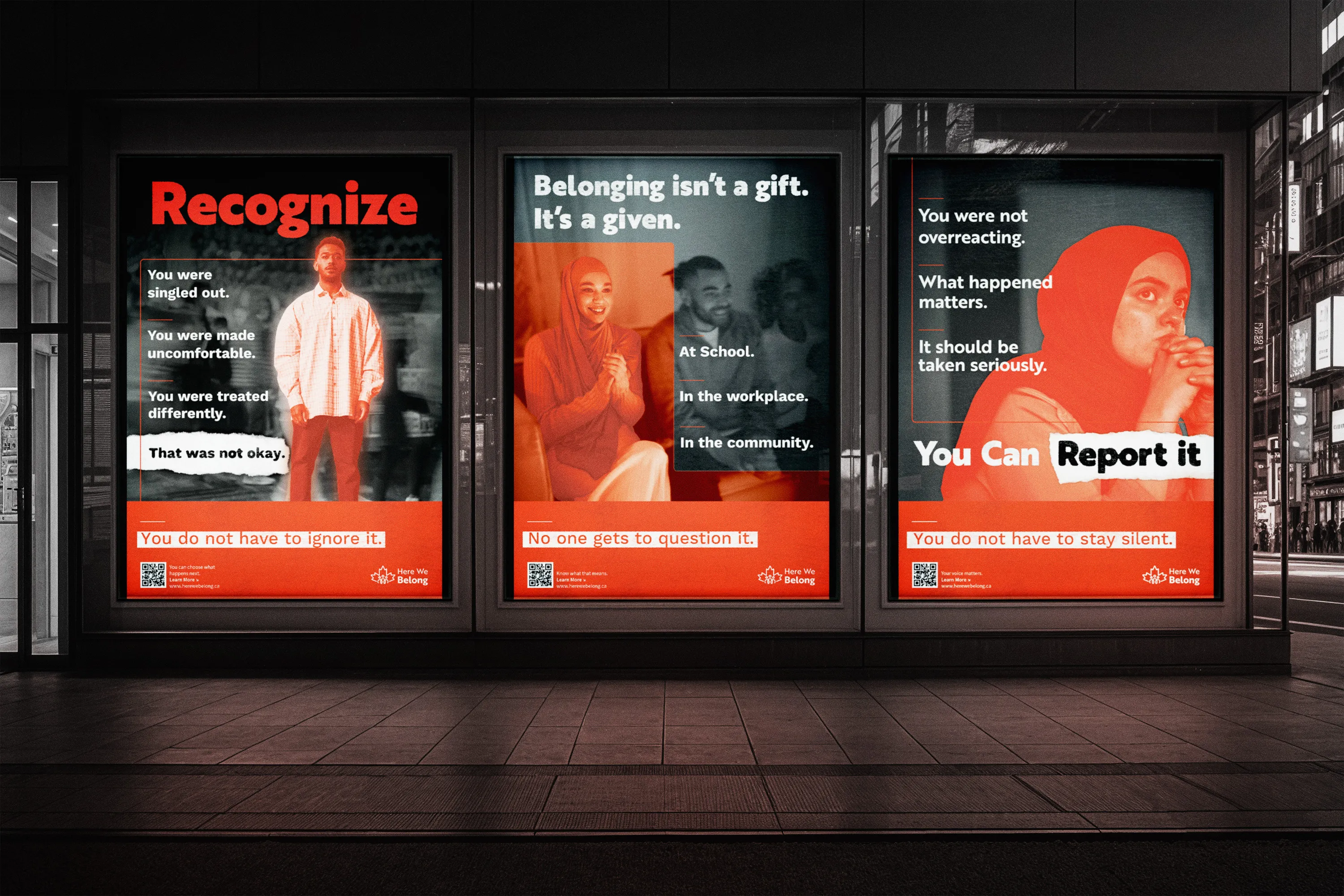
What Is Islamophobia?
Islamophobia refers to prejudice, discrimination, or hostility directed at Muslims or those perceived to be Muslim, based on faith, appearance, ethnicity, or cultural association.


Understanding is the Foundation for Justice
A shared understanding is the first step toward accountability
and prevention. When we look beyond definitions, the numbers reveal the scope and impact of Islamophobia in Canadian communities.
How Islamophobia Develops and Spreads
It manifests across individual behaviour, institutional practices, and public discourse. This includes verbal harassment, unequal treatment, exclusion, stereotyping, and policies or systems that disproportionately disadvantage Muslim communities.
Incidents are not Linear
Islamophobia is not limited to isolated incidents. Its cumulative effect undermines public trust, restricts participation, and erodes safety within schools, workplaces, and civic life.
Recognizing Islamophobia
Clear recognition of what constitutes Islamophobia enables institutions, educators, and communities to respond consistently, address harm early, and uphold principles of equity and inclusion.
Islamophobia in Canada:
Key Facts & Trends
Who is Affected


Impact


Why Reporting Matters


Why Islamophobia Hurts More Than Individuals
When prejudice goes unchecked, its impact spreads outward—affecting trust, participation, and the health of entire communities.
Islamophobia exists on a spectrum. Learning to recognize it helps you name what is happening and decide what to do next.
Erosion of Belonging
When Muslims feel unsafe or unwelcome, the effects ripple beyond individuals. Fear limits participation in everyday life. Over time, this weakens relationships between neighbours and reduces the sense of shared belonging within communities.
Communities function best when people feel seen, protected, and confident that harm will be taken seriously.
Institutional Impact
Repeated experiences of discrimination can erode trust in schools, workplaces, public services, and law enforcement. When people believe institutions will not respond fairly or consistently, they disengage.
This creates gaps in reporting, reduced cooperation, and missed opportunities for early intervention — making it harder for institutions to serve the communities they are meant to protect.
Social Division
Islamophobia deepens social divides by reinforcing stereotypes and “us versus them” thinking. This fuels misunderstanding, resentment, and fear — not only toward Muslims, but between communities more broadly.
When division replaces dialogue, opportunities for connection, learning, and cooperation are lost.
Democratic Values
A healthy democracy depends on equal participation, freedom of belief, and mutual respect. When a group feels targeted or marginalized, their willingness to engage — to vote, speak up, or take part in civic life — can diminish.
Protecting communities from discrimination is not only about safety. It is about upholding the shared values that allow diverse societies to function.
Why Many Incidents Go Unreported
Reporting barriers stem from fear, trust, access, and lived experience—not indifference.
Safety concerns silence many people.
Many individuals worry that reporting will lead to further harm, exposure, or escalation. When safety feels uncertain, staying quiet can feel safer.
Uncertainty about being taken seriously.
Past experiences, inconsistent responses, or perceived bias can make people doubt whether reporting will lead to meaningful action.
“This is just how it is.”
Repeated exposure to bias can cause people to downplay incidents or accept them as part of daily life, even when harm is occurring.
Shame and community expectations.
Concerns about stigma, family reputation, or being seen as causing trouble can discourage individuals from speaking up.
Systems feel hard to navigate.
Complex processes, limited language support, or unclear reporting pathways can stop people from taking the first step.
Reporting feels like another burden.
For those facing repeated incidents, the emotional effort required to document and report can feel overwhelming.
Not knowing if it “counts”.
Many people hesitate because they are unsure whether what they experienced qualifies as Islamophobia or is worth reporting.
Concern about impact on peers or family
Some avoid reporting out of worry that others—classmates, coworkers, or family members—could face backlash.
Worry about privacy and exposure.
Some fear that reporting will not remain confidential, or that their identity may be shared without their consent.
Understanding these barriers is essential.
Removing them is how reporting becomes possible.
From Awareness to Action

Spot it
Learn how Islamophobia shows up in everyday life.
From overt hostility to subtle bias, this section helps you identify patterns before harm escalates.
Understand it
See how prejudice takes root and spreads.
Explore the social, historical, and structural forces that shape anti-Muslim bias in Canada.
Reporting Matters
Understand why speaking up makes a difference.
Reporting helps reveal patterns, protect communities, and hold systems accountable.
How to Report
Know what to do when an
incident occurs.
Clear steps, practical guidance, and options that respect safety, choice, and context.