
Being Yourself,
Anywhere
Rights awareness, safety, and confidence in public life.
You have the right to practice your faith, express your identity, and take part in your community with dignity and safety. This page helps you understand your rights, navigate daily challenges, and access support if you need them.

Connected, Supported, Empowered

What the Law Protects
Freedom of religion is a constitutional right. This includes the right to wear hijab, pray, and practice your faith in public spaces and institutions. You do not need to justify or explain your beliefs to access this right.
⮑ Canadian Charter of Rights and Freedoms, Section
In Ontario, the Human Rights Code protects you from discrimination and harassment based on religion and sex. This applies to employment, education, housing, and contracts.
⮑ Ontario Human Rights Code
What This Means in Everyday Life
You cannot be denied a job, promotion, service, or housing because you wear hijab.
⮑ You cannot be asked to remove hijab unless there is a legitimate safety reason that cannot be addressed otherwise.
⮑ You have the right to request reasonable religious accommodation at work or school.
⮑ You have the right to a space free from harassment, including repeated comments, or pressure related to your faith.
Religious Accommodation Is a Legal Duty
Employers, schools, and service providers in Ontario have a legal duty to accommodate religious practices unless doing so causes undue hardship. This can include prayer breaks, flexible scheduling, or adjustments to dress codes.
⮑ Ontario Human Rights Commission, Duty to Accommodate
Accommodation is not a favour. It is a legal obligation.
You do not need to prove that your faith practice is shared by others. Sincerely held belief is enough. You also do not need to accept alternatives that compromise your dignity if reasonable accommodation is possible.
Protection From Harassment
Harassment is also prohibited. This includes repeated comments, jokes, or behaviour that creates a hostile or uncomfortable environment because of your religion or gender.
⮑ Ontario Human Rights Commission, Harassment
You Have Choices
Knowing your rights does not mean you must confront every situation. It means you can make informed choices. Speak up, seek support, or step back, knowing the law is on your side.
Navigating Public and Workplace Spaces
Navigating public and professional spaces as a Muslim woman can come with moments that feel uncomfortable, uncertain, or exhausting. This section explores common experiences and offers perspective, reassurance, and support. How you respond is always your choice.

Workplace and
Professional Settings
You may wonder how hijab or modest dress will be perceived during an interview or hiring process. These questions often surface, even when no one voices them directly. You are not required to change how you present yourself to fit an unspoken standard. Some women choose to address concerns if they arise, while others move forward without naming them. Both choices are valid.
Sometimes a policy is presented as neutral or applied to “everyone,” even when it affects you differently. You may choose to ask whether religious accommodation is possible, or you may decide to pause the conversation and seek guidance later. You are allowed to take time before responding.
Remarks about being more visible, approachable, or fitting in can feel vague or uncomfortable. You can ask for clarity about what is meant, or you can choose not to engage with comments that feel imprecise or unfair. You are not obligated to interpret or absorb them.
Asking for space or time to pray can feel daunting, especially in new environments. Requesting accommodation is a normal workplace process. Some women ask informally, others prefer written requests or support from HR. Approach and timing are yours to decide.
During Ramadan, you may receive comments about energy, productivity, or health that feel personal. You can respond briefly, redirect the conversation, or decline to discuss your practices. You do not owe explanations for how you observe your faith.
Professional events sometimes center on activities that do not align with your values. Consult a qualified Islamic scholar to discuss your specific situation. Your professionalism is not defined by how closely you mirror others’ choices.
Feedback that focuses on tone, presence, or fit can feel subjective or coded. You may choose to ask for specific examples, reflect on it privately, or document the feedback for future reference. You are allowed to seek clarity without accepting vague judgments.
At times, you may be positioned as a spokesperson for an entire community. You can gently state that you speak only for yourself. You can also decline this role entirely. Representation is not your responsibility.
Education, Training,
and Early Career Spaces
You may be asked to explain or justify an accommodation request. You are allowed to refer to institutional policies or request that the matter be handled through formal channels. You do not need to defend your beliefs to be respected.
Being left out of group dynamics can be subtle and difficult to name. Some women choose to address it directly, while others involve an instructor or focus on completing their work independently. Each response reflects care for yourself.
Certain placements or environments may raise questions about clothing requirements. You can ask whether alternatives exist that meet safety standards while respecting your faith. These conversations are about problem-solving, not compromise of dignity.
Requesting flexibility around religious observance can feel uncomfortable. You may choose to give notice early, request adjustments quietly, or keep details minimal. You are not required to share more than you wish.
Public-facing Roles and Everyday Public Life
Unsolicited remarks can happen in public or customer-facing roles. You may respond briefly, ignore the comment, or disengage completely. Courtesy is optional when your comfort is affected.
Some questions sound friendly but cross personal boundaries. You can redirect the conversation, set a clear boundary, or end the interaction. Protecting your space is allowed.
Even positive remarks can feel invasive or tiring. You are free to acknowledge them without continuing the exchange or offering access to yourself.
Small incidents can accumulate over time and affect your sense of safety. You are allowed to trust your instincts, note patterns, and seek support if/when you choose.
Choose What Feels Right
There is no single correct way to respond in these situations. What matters most is what feels right for you at that moment.
Some days, you may choose to speak up or ask for clarity. Other times, you may decide to step back, disengage, or seek support later. Each of these responses is valid.
Your safety matters.
Your well-being matters.
Your dignity matters.
You are allowed to choose the response that protects all three.
Explaining Hijab
and Identity
You do not owe anyone an explanation for your faith, your clothing, or your identity. This section begins from a simple truth.

Visibility Without Obligation
Wearing hijab often brings a level of visibility you did not ask for. With that visibility can come questions, assumptions, and expectations that accumulate over time. Some interactions feel light. Others linger, leaving you feeling exposed or responsible for someone else’s curiosity.
Many women feel pressure to respond politely, to educate patiently, or to represent something larger than themselves. That pressure can come from strangers, colleagues, classmates, extended family, or even well-meaning friends. It can also come from within, from the sense that silence might be misunderstood.

In Everyday
Public Interactions
In public spaces, questions about hijab often arrive casually. A stranger may ask why you wear it, where you are from, or what it means. Sometimes the exchange ends there. Other times, it opens into more personal territory than you expected.
In these moments, you are free to decide how much access you give. You may answer briefly, redirect the conversation, or disengage entirely. Curiosity does not create an obligation, and politeness does not require you to explain yourself.

In Work and Learning Environments
In professional or academic settings, questions feel more complicated. Colleagues or classmates may frame their interest as learning, inclusion, or helping others understand. You may be invited to share your story, explain your choices, or participate in conversations about diversity.
While these moments can feel affirming at times, they can also carry emotional weight. You are allowed to decide when sharing serves you and when it does not. You can speak in general terms, set limits around what you disclose, or decline altogether. Choosing privacy does not make you disengaged or uncooperative. It reflects self-awareness.
When questions come from people in positions of authority, such as managers or instructors, the imbalance can feel sharper. You are not required to justify your beliefs or narrate your identity to be respected. Redirecting to policy, process, or keeping your response minimal is fine.

In Social and
Community Spaces
Social settings often bring their own expectations. Conversations with friends’ families, extended relatives, or community members may assume openness or explanation. You may also feel the quiet pressure of representing well, of countering stereotypes simply by being present.
It is okay to keep answers light. It is okay to change the subject. It is okay to step away. You are not responsible for carrying other people’s understanding, even when they mean well.

In Online and Digital Spaces
Online spaces can intensify visibility. Comments on photos, public debates, or private messages may ask for emotional labour without consent. The public nature of these interactions can make them feel harder to escape.
You are allowed to ignore, delete, block, or disengage. Silence is not avoidance. It is a boundary. Access to you, online or offline, is never automatic.
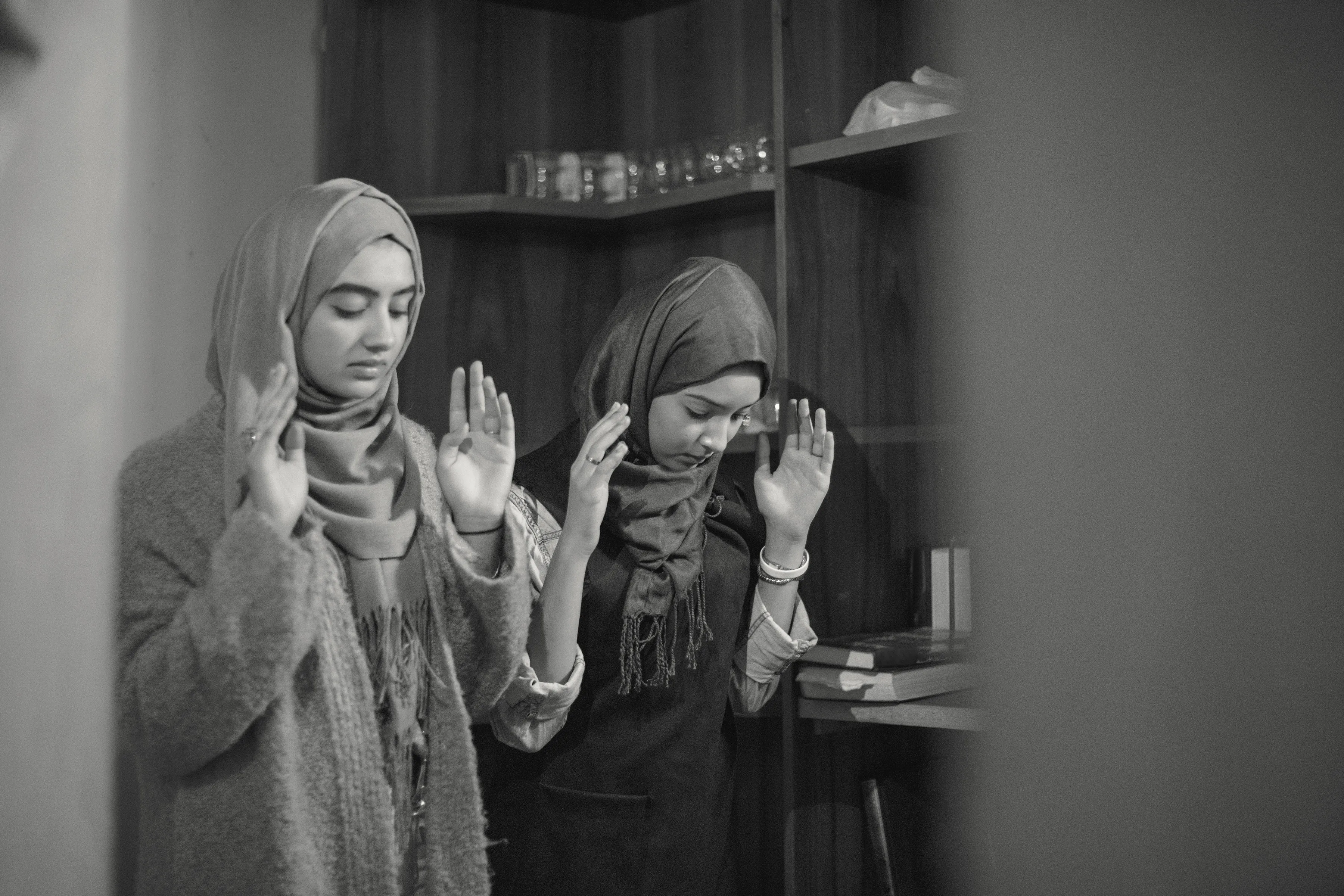
Existence is Not an Invitation
Hijab is one part of who you are. It is not an invitation to scrutiny, debate, or education.
You are allowed to move through the world as a full person, not a teaching moment. You are allowed to choose your words carefully, or choose none at all. Both are forms of dignity.
Guidance for Navigating Conversations About Hijab and Identity
Allowed to Do
Might Feel
expected to explain
or disengage
move on without continuing
or decline to explain
or speak only for yourself
unsure how much to share
or change the topic
responsibility entirely
or limit engagement
Situational Awareness and Safety
Awareness is not about fear. It is about staying connected to yourself as you move through the world. This section is about trusting that instinct and knowing you are allowed to act on it.

Safety is a Form of Wisdom
Many Muslim women learn, often quietly, to read a room, notice shifts in tone, or sense when something feels off. This kind of awareness is not overthinking. It is care. It is the ability to stay present while also staying grounded in your own safety.

In Public Spaces
and on Transit
Most public interactions pass without incident. Still, there are moments when attention lingers too long, comments cross a line, or someone’s presence begins to feel uncomfortable.
You may notice small signals first. A change in how close someone stands. A look that does not move away. A tone that shifts from casual to invasive. These moments matter, even if they are hard to explain.
You are allowed to move. You are allowed to change direction, leave a space, or seek out others nearby. You do not need a clear reason or a complete story to prioritize your comfort.

In Work, School,
and Institutional Settings
Safety concerns do not always look dramatic. Sometimes they show up as repeated boundary crossings, subtle power imbalances, or situations where you feel isolated without knowing why.
You may find yourself in conversations that feel personal when they should be professional, or in spaces where you are alone with someone and feel uneasy. Even when nothing explicit has happened, that discomfort is worth listening to.
You are allowed to trust patterns, not just incidents. You are allowed to distance, ask for changes, or involve others without waiting for certainty.

In Online and Digital Spaces
Digital spaces can blur boundaries quickly. Messages can persist, attention can escalate, and interactions can feel harder to exit.
You may receive repeated messages, find yourself targeted in public threads, or worry about screenshots or content being shared without your consent. These experiences can feel exposing, even when they happen quietly.
You are allowed to disengage. You are allowed to block, mute, or step back without explanation. Protecting your digital space is part of protecting yourself.

During Travel and Movement
Movement often brings new environments, routines, and levels of visibility. Traveling alone, navigating transit late at night, or passing through airports and border spaces can heighten awareness.
Preparation can help you feel steadier, but it should not restrict your freedom. You are allowed to adjust plans, ask for help, or pause when something does not feel right. Familiarity is not a requirement for safety.

Be vigilant and
Do What You Must
Situational awareness does not mean expecting harm. It means staying attuned to yourself.
⮑ You are allowed to leave without explaining.
⮑ You are allowed to choose distance over endurance.
⮑ You are allowed to act early and quietly, in ways that protect yourself.
⮑ Your intuition is not an overreaction. It is information.
A Practical Reference for Situational Awareness and Safety
Allowed to Do
feels neutral
if needed
lack of safety
Reporting and Support Pathways
You are allowed to seek one without the other. You are also allowed to take time before deciding what feels right. This section is here to clarify that support and reporting are not the same thing.

Uncertainty Does Not
Erase Impact
Experiencing harm, discomfort, or repeated boundary-crossing can leave you unsure of what to do next. Many women pause at this point, not because support is unavailable, but because it is unclear which option fits their situation.
There is no threshold your experience must meet in order to matter.

Personal and
Informal Support
Sometimes the first need is simply to talk. You may want to understand what happened, how it affected you, or hear yourself think out loud.
Personal support can include trusted friends, family members, faith leaders, counsellors, or community support. These conversations are often where clarity begins. They can help you feel grounded, validated, and less alone, without requiring any decision beyond being heard.
Seeking personal support does not commit you to reporting or escalation. It is a way of taking care of yourself.

Workplace and
Educational Reporting
In work or school settings, concerns often involve repeated comments, unequal treatment, or power imbalances. Reporting in these contexts can feel intimidating, especially when outcomes are uncertain.
You may choose to speak with a supervisor, HR representative, administrator, or equity office. Some women prefer to ask questions informally before making anything official. Others choose to document experiences first and decide later.
Reporting is one option, not an obligation. You are allowed to gather information, seek advice, or step back at any point in the process.

Community and
Advocacy Support
Sometimes it helps to speak with someone who understands both the context and the systems involved.
Community organizations and advocacy groups can offer culturally informed guidance, help you understand your options, and support you in deciding what to do next. They may help you document experiences, explore informal resolutions, or connect you with legal or professional resources if needed.
This kind of support is about accompaniment, not pressure.

Emergency and
Crisis Support
If you feel threatened, or in immediate danger, urgent support matters.
Emergency services, crisis lines, and shelters exist to prioritize safety and immediate care. Reaching out in these moments is not an overreaction. It is an act of protection.
Even in urgent situations, you deserve to be treated with respect and dignity.

Safety Sets the Pace
⮑ You are allowed to move at your own pace.
⮑ You are allowed to change your mind.
⮑ You are allowed to seek support more than once.
Some women speak up immediately. Others wait. Some never formally report and still find healing and support through other pathways.
There is no right timeline. There is only what feels safest and most supportive for you.